The Geminids peak on the night of 13 to 14 December 2026, and this year the Moon helps: it is a thin crescent that sets at 8:45 pm in Cairo, so the rest of the night is dark (American Meteor Society, timeanddate.com). Get out of the city, away from its lights, and watch from about 10 pm until dawn. The Geminids are usually the strongest meteor shower of the year (AMS).
When to watch the Geminids in 2026
The shower is active from 4 to 20 December. The International Meteor Organization predicts the peak on 14 December at 14:00 UT (IMO 2026 calendar), which is 4 pm in Cairo (Cairo is on UTC+2 in December), in daylight. That is less of a problem than it sounds. The Geminid maximum is broad, with a zenithal hourly rate (ZHR, explained below) of 100 or more over roughly 10 to 12 hours, and the timings of the best-observed peaks of the past twenty years, carried over to 2026, fall between 13 December at 21:00 UT and 14 December at 18:00 UT (IMO).
The American Meteor Society gives the night of Sunday 13 to Monday 14 December as the peak night (AMS), so that is the one to choose in Egypt. The following night, 14 to 15 December, is a close second, as the IMO's predicted peak falls between the two.
| Night | Moon sets (Cairo) | Dark sky from | Good viewing |
|---|---|---|---|
| 13 to 14 December | 8:45 pm | 8:45 pm | about 10 pm to dawn |
| 14 to 15 December | 9:41 pm | 9:41 pm | about 10 pm to dawn |
Moonset times are from timeanddate.com. The Geminid radiant, the point the meteors seem to come from, is in Gemini. Seen from north of the equator, it rises around sunset, is well placed from about 10 pm and is highest around 2 am local time (IMO, AMS).
How many meteors will you see?
The IMO gives a ZHR of 150. That is a calculated figure for an ideal observer under a perfectly clear, dark sky with the radiant straight overhead (IMO). NASA puts it at about 120 meteors an hour under perfect conditions (NASA). Real counts are lower, and they drop fast with light pollution.
The Geminids are known for bright meteors and fireballs (IMO), and they come from an asteroid, 3200 Phaethon, rather than a comet (NASA).
Why the desert beats the city
Cairo is a huge, bright city, and its glow hides the fainter meteors. NASA's first tip for any meteor shower is to go somewhere well away from city lights and street lights (NASA). For most visitors staying in Cairo, the nearest dark skies are out in the desert beyond Giza.
Two practical points:
- Archaeological sites close in the afternoon. The Saqqara site, for example, is open from 8 am to 4 pm (Ministry of Tourism and Antiquities). Watch from a place you are allowed to be at night, such as the grounds of a hotel or lodge outside the city.
- Arrange your transport in advance. Late at night, you want a driver who knows where you're going and when to pick you up.
What to bring
- Warm layers. December nights are cold. Even in Cairo the average low is about 12 °C (53 °F) (NOAA normals, via Wikipedia), and the open desert feels colder in the wind. Bring a jacket, a hat and a blanket.
- Something to lie on. A mat or a reclining chair. NASA suggests lying on your back with your feet facing south and looking up (NASA).
- Patience. Give your eyes about 30 minutes to adapt to the dark (NASA), and keep your phone screen off or dimmed.
- A thermos and snacks. You'll be out for a few hours.
- No telescope. Meteors cross large parts of the sky. Your eyes are the best tool.
Make a day of it: sunset at Saqqara first
You can spend the afternoon in the same desert. Our Saqqara ride starts about two hours before sunset and lasts about two hours. On 13 December the sun sets at 4:56 pm in Cairo, and the sky is fully dark by about 6:21 pm (timeanddate.com). So the ride ends as the light goes, with a few hours left for dinner before the meteors are at their best.
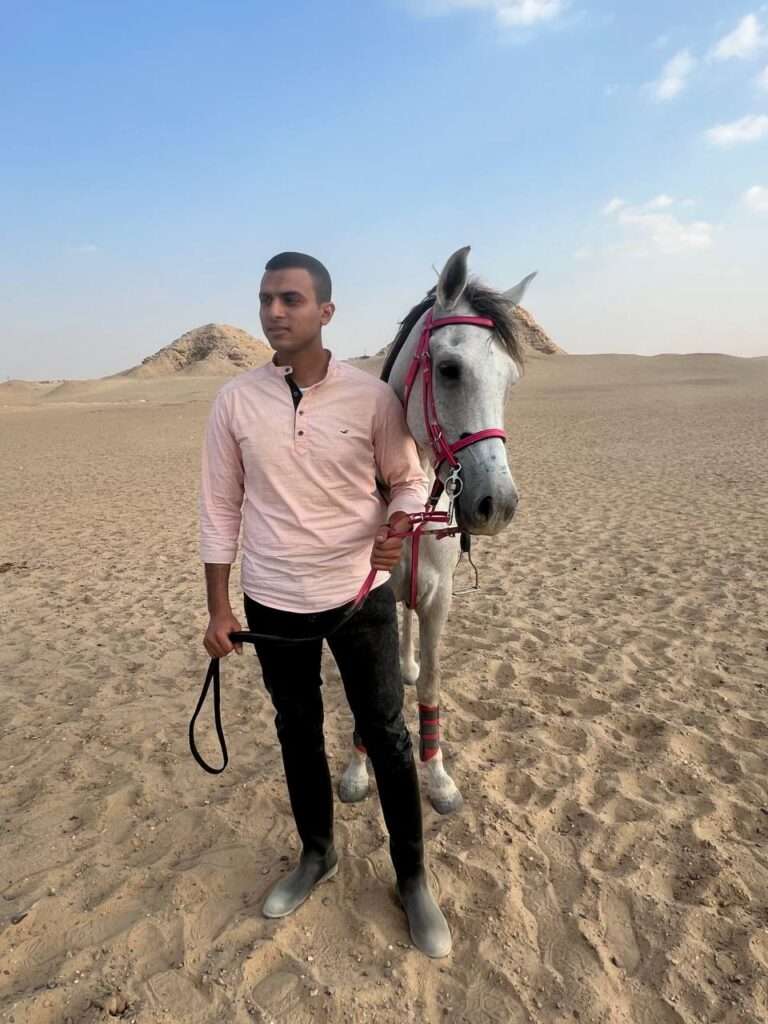
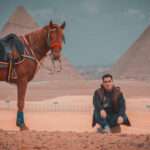
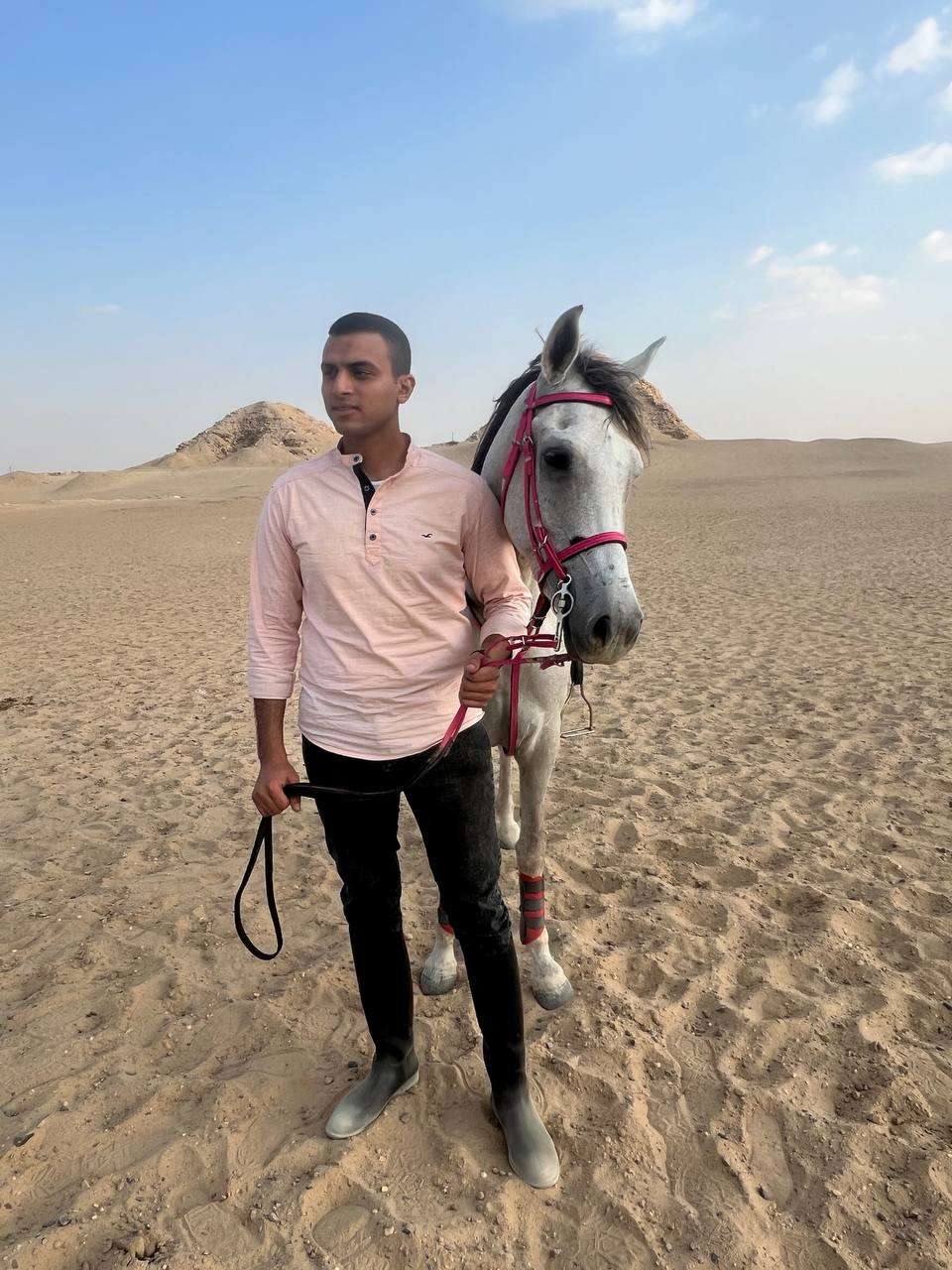
The ride crosses open desert with the pyramids of Abu Sir and Saqqara around you, including the Step Pyramid of Djoser. It costs from $59 per rider and needs no entrance ticket. Riders from 6 years old can join, up to 110 kg, and first-timers are welcome. Water is included, and we send the meeting point on WhatsApp after you book. The ride ends as the light goes, and you go on to your own viewing spot.
Hotel pick-up can be added, with the price confirmed on WhatsApp. Questions about timing? Message us on WhatsApp.
Quick answers
When is the best night to see the Geminids in 2026?
The night of 13 to 14 December. The Moon sets at 8:45 pm in Cairo, and the meteors are best from about 10 pm until dawn.
Will the Moon spoil the Geminids this year?
No. It is a thin waxing crescent that sets in the evening, so the late night is dark.
Can I see the Geminids from Cairo?
Only the brightest ones. For a proper show, get away from the city lights, for example to the desert edge outside Giza.
How cold is the desert at night in December?
Cold. Cairo's average December low is about 12 °C (53 °F), and the open desert feels colder. Dress in warm layers.